THE_LINE / THURSDAY 11:00 ET
[ STATIONS LIVE ]
Pick the last AI tool you tried to build. The one that almost
made it. It probably worked once. But you couldn't reproduce it.
You opened a fresh chat and hit the same errors you hit before
and gave up.
You run a multi-million dollar brand. You don't usually shelve
things. The reason this keeps happening is friction.
Friction used to be built into the work. When the tool didn't
work, everything stopped. You stayed with the problem until you
understood it. That friction was the gym. It built the muscle
that helped you learn and grow.
AI removed the friction. You can always generate something.
There's always another prompt and a fresh chat designed to keep
you happy.
Without friction, you don't learn what experts learn from
getting stuck.
Friction is what every format you tried failed to restore. They taught you, talked at you, or built things for you. None of them put you in a place where you had to push past being stuck.
Six formats. None of them put the friction back.
There's a seventh.
The seventh format is something you already know. You've eaten in
one.
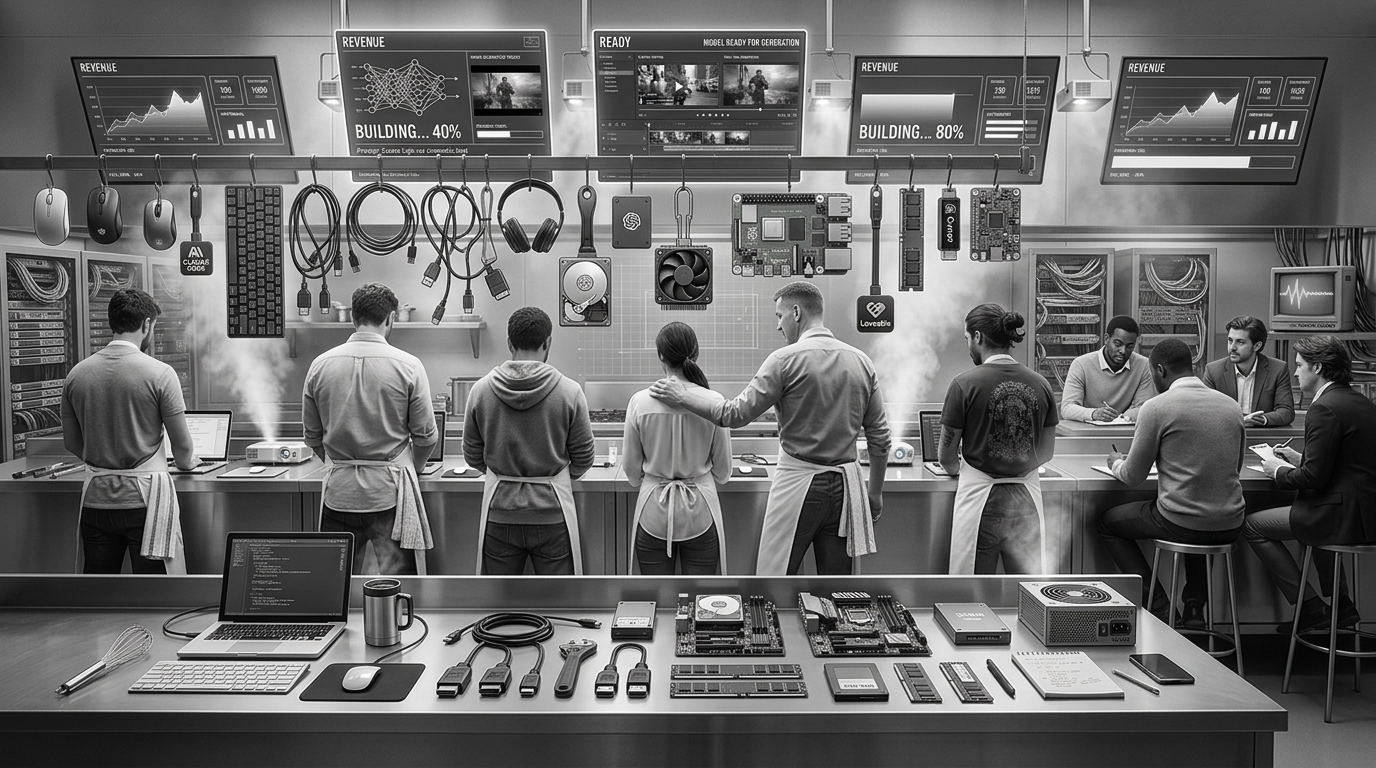
In a high-end kitchen, the chef cooks where you can see. Every
decision is visible. The line cook starts by watching. Then they
cook with the chef calling adjustments. Then they run their own
station.
That's the format that's been training masters for two thousand
years. Surgeons, carpenters, pilots. Watch the master decide.
Then decide yourself with the master watching.
That's an Open Kitchen.
Open Kitchen runs in two halves. In the first, Will or Max builds
an AI tool live in the room. The thinking is visible because the
work is visible. You see what got rejected, what got tried, what
got changed and why.
In the second, you build the next tool. We watch the line. When
you hit the place AI would let you slide past, we keep you there
until you push through. The friction goes back where it belongs.
That's why Thursdays work.
Each tool came out of an Open Kitchen build. Operator brings the bottleneck. First version gets built live. Production version ships with us watching the line. Names held back until members opt in. Brands and revenue bands are real. Tools are running.
Revenue pacing report. Pulls from Shopify, Klaviyo, Amazon Seller Central, and the in-house BI stack. Posts the daily pacing number to Slack at 6am. Auto-fires team milestone congrats the moment a revenue threshold hits. Replaced 3 hours of manual reporting per week. Built between two other calls on a Thursday morning.
Direct Response OS. Voice-of-customer extraction from Reddit, Amazon reviews, and support tickets goes in. Awareness mapping, ad copy, and advertorials in the operator's voice come out. Pressure-tested across three client brands in the room. Now runs daily.
Content command center. Raw founder iPhone video goes in. The system fingerprints the clip, tags it by location, mood, and content type, drops it into the right content bucket, writes captions in founder voice, sends it through a multi-stage approval gate, and lands the finished post in a Dropbox folder ready to schedule. Replaced a part-time editor and most of a content manager.
Operations second brain. Pulls Shopify, the 3PL feed, the ad platforms, the finance stack, and Slack into one source of truth. The CFO opens one dashboard instead of seven. The role they were about to backfill stayed open.
Higgsfield MCP plugged into Claude. Paste a competitor's product URL. On-brand static ads in your visual style come out the other side. Built from zero in ten minutes, live, on a Thursday.
The operator whose bottleneck is on the menu describes it in plain language. We define what a working tool looks like. We pick the stack and the success condition.
Will, Max, and the operator build the tool live. The room watches the line. Every decision visible. What got rejected, what got tried, what got changed. The cohort builds the same tool on their own machines.
You take the recipe to your station. The tool installs in your business. The Slack channel handles questions when you hit the place AI would let you slide past. The recording, project file, and prompt library land in the resource hub.
The team uses the tool. Without the founder. Without the consultant. Without anyone explaining what it is. It just runs.
Two operators running the build. Zero theory. You leave with a working tool.
Took Organifi from $18MM to $100MM run rate in 18 months. Took a second ecom brand to $100MM in 12. Started his career at the Corporate Executive Board in DC advising Fortune 500 senior executives. Now operates as a VC partner advising DTC brands. He builds the tools live in the room. The Foreplay ad analyzer that scores hooks across a 50-brand watchlist was a Will build.
Fractional AI Officer. Built the Cognitive Fingerprint methodology that pulls what founders actually know - the judgment calls, the "I just know" decisions, the pattern they use when reviewing their team's work - and encodes it into systems the team can run without them. A marketing agency went from 6 hours per SOW to 30 minutes. A medical marketing firm captured their QC lead's decision logic in 15 minutes. Reviews that used to take a full day now run in under 10 minutes across 56 client sites. They never backfilled the QC seat.
Yes. If you have ever set up a Zap or opened a Claude project, you have enough. The whole point of the format is that you build alongside Will, Max, and operators a week or two ahead of you on the same path. The cohort is the line you join.
The Loom, the project file, the prompts, and the working tool itself land in the resource hub before the call ends. You can run the build async on Friday morning and ask questions in Slack.
Yes. The tools are yours. Built in your stack, on your data, sitting on your machine. We do not gate them behind membership. We do not hold your work hostage.
Neither one ends with you running a working tool by Friday. We build with you, in the room, on a real bottleneck, every other Thursday. Then we watch the line when you ship the next one yourself.
DTC and ecom operators at $5MM+. Founders, CEOs, CMOs, COOs, heads of growth. Names you would know if we listed them. We do not list them. Members opt in privately. The roster lives behind the application. You see it the day you're in.
Cohort 01 pricing is shared after application. We pick operators who will actually build, then we have the conversation.
One seat per operator in Cohort 01. You attend. Once you are in, your team gets the tools, the recordings, and the resource hub.
No. Every tool is built in YOUR Claude account, on YOUR data, in YOUR stack. We do not host. We do not centralize. We do not see your numbers unless you choose to show them.
Pick the operator in your network who is shipping AI tools.
Quietly. Every Thursday. The one who doesn't talk about it on
LinkedIn because they don't need to.
They have your background. They have your discipline. They have
your technical level. They just stopped trying to learn AI alone
in a tab at 11pm.
One Thursday a fortnight is the difference between the operator
who pushed through and the operator who slid past.
By the end of Cohort 01 you will have built 6-8 working tools
plugged into your business. Other operators will reference your
room when they pitch to investors. Your team will stop waiting
on you for the things AI should already be doing.
Or you can read another article about AI in DTC. You've read enough. We both know it.